


I’ve been staring at sonar images of rusting metal drums sitting more than four kilometres under the Atlantic. This summer, a French research vessel went looking for them — and found more than anyone bargained for.
What they found
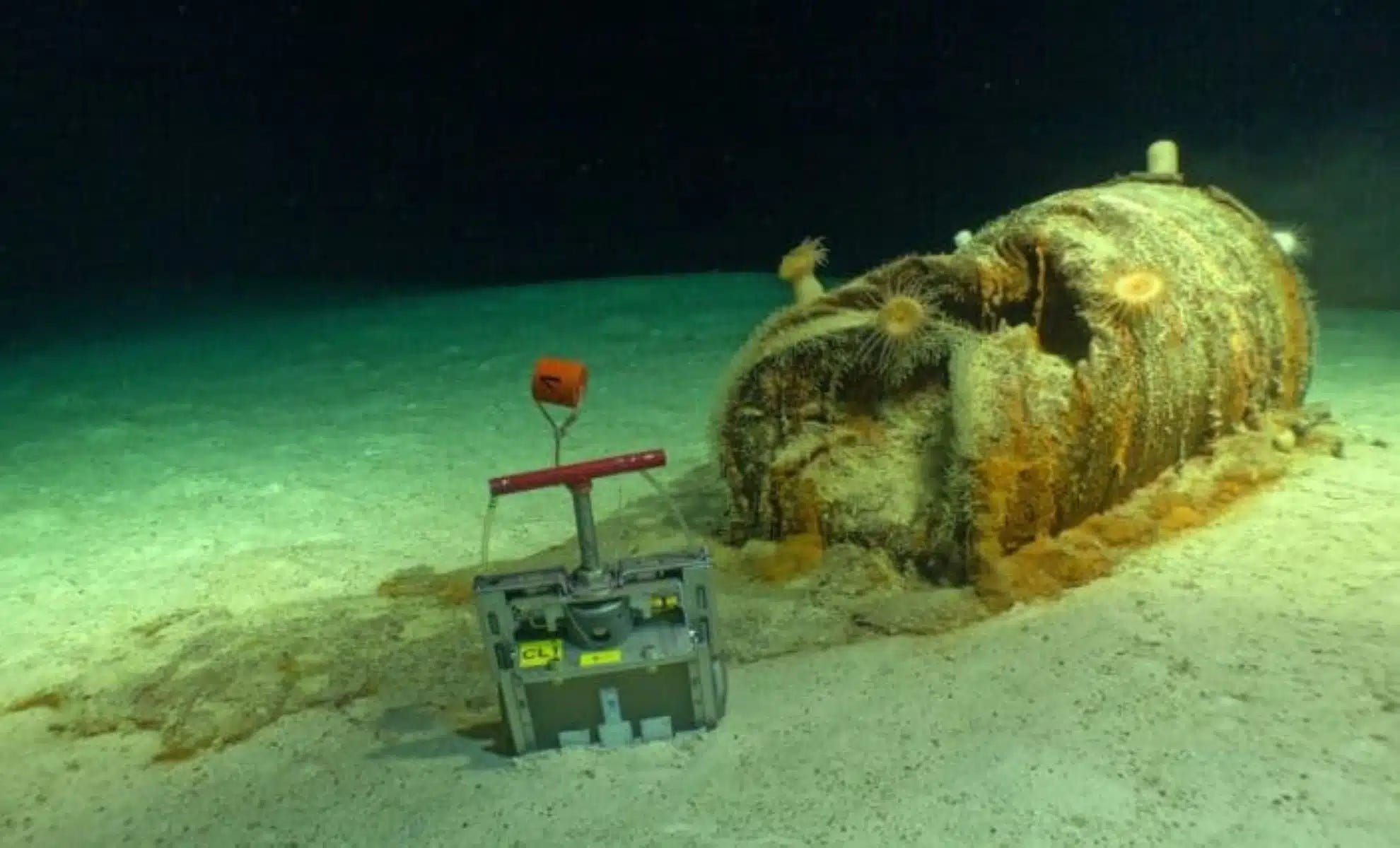
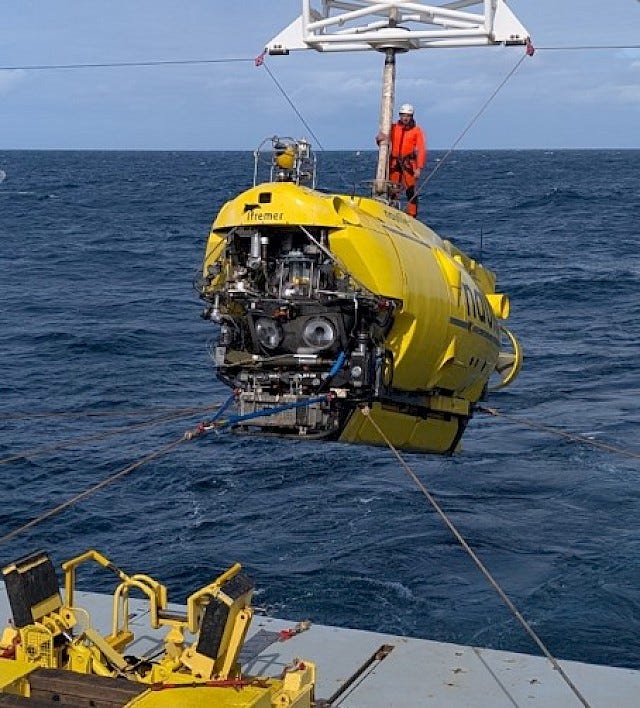
Between late May and late June this year, the research ship Pourquoi Pas? and its submersible Nautile spent weeks combing a patch of the north-east Atlantic roughly 650 kilometres off the coast of France and Spain, at depths between 3,000 and nearly 4,700 metres.
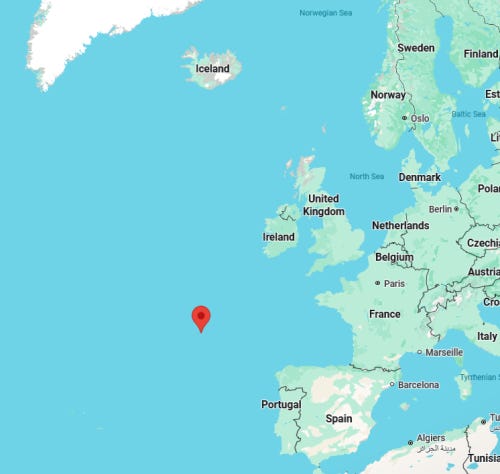
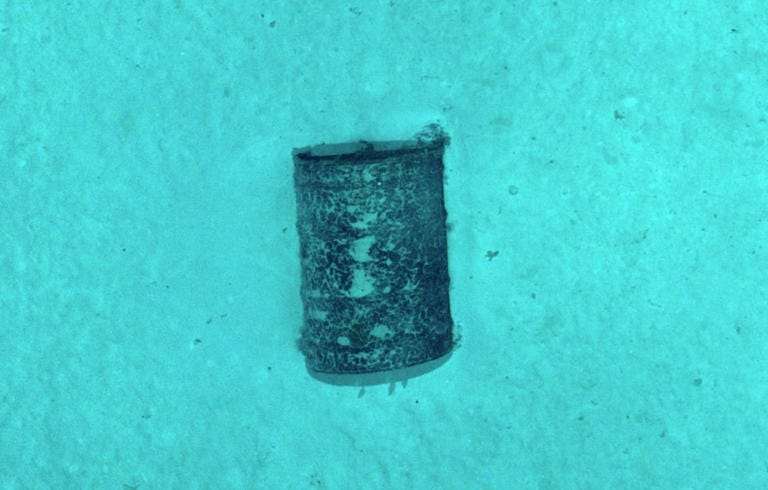
Using sonar and close-range cameras, the CNRS-led NODSSUM mission mapped more than 3,300 individual containers and estimated that upward of 200,000 barrels of radioactive waste are sitting on the seabed there — corroded, some visibly leaking, and slowly becoming part of the deep-sea ecosystem. Sediment cores and biological samples came back showing cobalt-60, caesium-137 and americium-241 — man-made isotopes with no other plausible source. Scientists are careful to say they don’t yet know how far, or how fast, that contamination is spreading through the food chain. That’s the honest, unsettling answer: they don’t know yet, and neither do we.
Where did it come from?
Here’s the part that should make Canadians sit up. This wasn’t a rogue dumping operation. It was legal, permitted, and coordinated — for decades.
Between roughly 1949 and 1982, at least nine countries used the north-east Atlantic as a radioactive dumping ground under the watch of what’s now the OSPAR Commission and its predecessor bodies. All told, an estimated 150,000 tonnes of waste went over the side of ships. Some of the biggest contributors:
The United Kingdom — responsible for the largest share by far, roughly 78% of the total radioactivity dumped
France — including a documented 46,000 barrels dumped over just two years, 1967–69
Switzerland, Belgium, the United States, the Netherlands, Sweden, Germany and Italy
The waste came from nuclear power plants, fuel reprocessing plants, hospitals, research labs and decommissioned reactors.
Wait — isn’t this illegal?
Yes, now. The London Convention banned dumping high-level waste at sea in 1972 and added a voluntary moratorium on low- and intermediate-level waste in 1983. OSPAR made the ban binding and permanent for the north-east Atlantic in 1992, and the London Convention’s 1993 amendment turned that into a global ban on dumping any radioactive waste at sea, in force since 1994.
So what we’re looking at is a toxic hangover from a period when this was perfectly legal — a reminder that “legal at the time” and “safe” are two very different things, and that today’s approved industrial practice is tomorrow’s Atlantic-floor scandal.
The Canadian question
So where does Canada fit into a story about European countries dumping barrels decades ago? Not directly — there’s no evidence Canada dumped waste in the Atlantic. But look at the fuel cycle, and a harder question appears.
Canada is the world’s second largest producer of uranium, with about 13% of total world production. Through Canada’s mines in northern Saskatchewan, we are a longtime supplier to France’s nuclear power complex.
Could some of the fission products now leaching into the Atlantic have started life as Canadian ore?
There is no firm link, but Canada has been a major global uranium exporter since the 1950s, long before anyone was tracking — let alone disclosing — exactly whose ore ended up in whose reactor, whose fuel rods, and eventually whose waste barrel.
That uncertainty is itself the point. Canada exports roughly 90% of the uranium it mines, and has spent seventy years doing so with remarkably little public conversation about where it ends up — or what happens to it, and to the waste it becomes, decades later.
Why this matters here at home
Canada has already chosen a site for its own permanent deep geological repository for high-level nuclear waste — a decision meant to hold for tens of thousands of years — but the project still faces regulatory approval and has yet to secure the consent of local First Nations before construction can begin.
The Atlantic barrels are a case study in what happens when a generation decides a disposal method is safe enough, and leaves the bill for later generations to discover, quite literally, in the dark. We should be asking harder questions about where our uranium goes and what obligations — moral, if not legal — follow it there.
If you found this interesting or informative, please like or share.
Leave a comment to explain your vote (paid subscribers)
Last week’s poll results
Last week we imagined what the world might be like if Prime Minister Carney used his international prestige to champion peacebuilding. I asked you, “Should Prime Minister Carney use his international influence to champion peacebuilding over increased military spending?”
Nine-in-ten readers said, “Yes, lead a diplomatic pivot.” One-in-ten felt that defence should be the priority, or there should be a balance between defence and diplomacy.
Read comments

At first the mines seemed like a wartime emergency, and then we were lulled with lies about the peaceful atom and cheap power. It was easy to assume that the waste problem would be solved, as so many others had been, producing spectacular technical progress. However, we failed to notice that loose neutrons are like a spreading stain that can only be slowed down, never stopped until they have run their course. We might as well try to repeal gravity.