


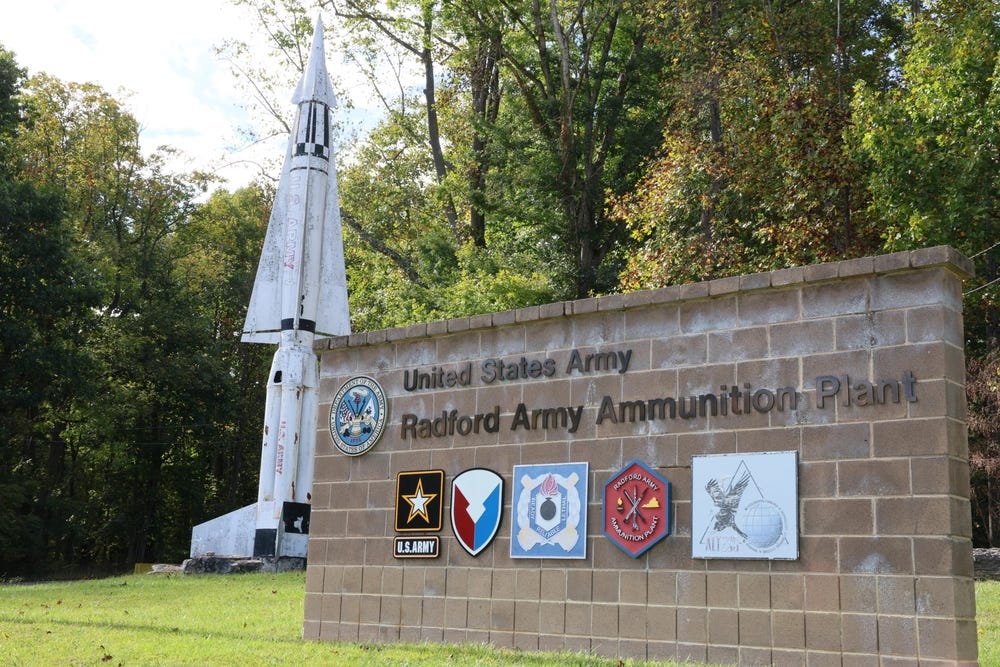
In 2024, Hurricane Helene flooded the Radford Army Ammunition Plant in Virginia.
It washed away storage containers holding thousands of gallons of a cancer-linked propellant chemical.
The U.S. Army didn’t warn residents for weeks. Two years later, three of the containers still haven’t been found.
That’s the opening scene of a new investigation by Sonner Kehrt of The War Horse, republished this week by Defense News. Its argument is simple: as the Pentagon races to restock after the Iran war, the communities around its ammunition plants are paying the price.
Just days earlier, Canada’s Auditor General released her report on the Canadian Armed Forces’ ammunition. And Parliament is moving to make Canadian defence production faster, under a new law.
So it’s fair to ask: what’s happening to the air and water around Canada’s ammunition plants?
“You can’t increase production without…”
Virginia regulators listed Radford as the state’s top releaser of toxic chemicals in 2022. It has been cited again and again for discharging pollutants into the river, and it still burns and detonates explosive waste in the open air. In 2024 alone it released more than 900 pounds of lead and lead compounds into the air.
Lenny Siegel of the Center for Public Environmental Oversight told The War Horse that, counted by contaminated sites, the U.S. military is “far and away the largest polluter in the United States.” His math is blunt: if you multiply production by ten, you multiply the releases by ten.
“You can’t increase production without increasing the toxic byproducts that come from that production.”
— Alyssa Carpenter, Citizens for Arsenal Accountability
A former EPA official, Mathy Stanislaus, put it more bluntly still: the Pentagon is “effectively self-regulating.”
Canada’s own toxic track record
We don’t have to look south to find the problem. The Canadian Army’s own trade magazine, Canadian Army Today, lists the companies that make our ammunition. Several have a history.
Salaberry-de-Valleyfield, Quebec. General Dynamics is expanding its explosives plant to produce more than 7,000 tonnes a year of artillery propellant, paid for by the U.S. Army. Quebec’s environmental review board (BAPE) found that the open-air burning of explosive waste is the site’s main source of fine particulate pollution. The company had done just one air-quality sampling, in 2008. As The Rover reports, the BAPE was “perplexed” that the burning permit can be renewed indefinitely. Quebec approved the expansion anyway.
Rockwood, Manitoba. Bristol Aerospace, now Magellan, dumped and burned spent rocket fuel and solvents in an unlined pit at its propellant plant near Winnipeg. As James Wilt documented in Canadian Dimension, well water is now restricted across more than 100 square kilometres. Contamination still runs more than ten times recommended limits. No fines were ever issued.
Shannon, Quebec. Next to CFB Valcartier, groundwater was contaminated for decades with the carcinogen TCE. In 2012, a court ordered DND, SNC-Lavalin and General Dynamics to compensate residents. About 5,000 people are eligible.
Notice the pattern? And there’s no sign of any federal environmental assessment.
Billions for ammo we can’t keep track of
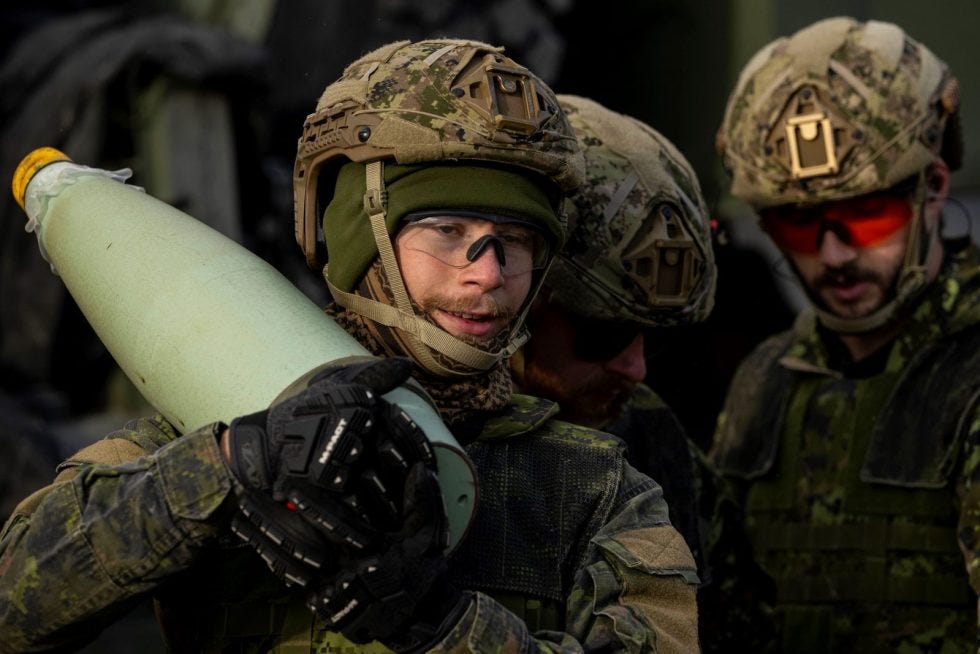
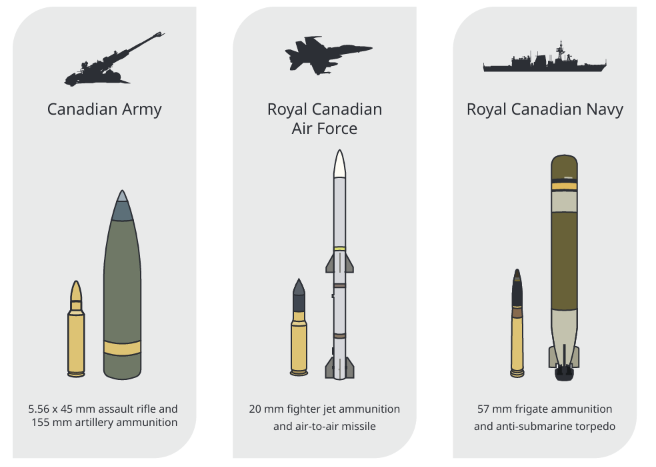
Despite that track record, Canada is about to make and buy a lot more ammunition. Ottawa has committed $9.2 billion over 13 years to rebuild its combat stockpile, and has named ammunition one of ten priorities in its Defence Industrial Strategy. General Dynamics, Magellan and the other suppliers stand to benefit.
Auditor General Karen Hogan’s October 29 report found that National Defence “did not manage its ammunition” to meet its needs. used only 56 per cent of their regular-use ammunition, mostly for training and exercises. Guided munitions and bombs held for regular use sat at 293 per cent of their inventory target.
And the combat stockpile still has “significant gaps” that the auditors say will take years to close.
One line in the report deserves more attention. The auditors did not examine “storage, handling, or disposal of ammunition.” In other words, nobody looked at what happens to all that surplus when it expires.
Does Bill C-40 even ask the question?
Bill C-40, now before the all-party National Defence committee in Parliament, creates the new Defence Investment Agency. It lets the minister skip competitive bidding for “urgent operational requirements,” national security or to support a strategic industry.
Take a look through all 34 pages. The word “environment” doesn’t appear once.
The safeguards are so thin. The federal Impact Assessment Act lets cabinet exempt any project on national security grounds. And National Defence is already Ottawa’s biggest climate polluter. It accounts for nearly half of federal building and fleet emissions, and its military fleet is exempt from the interim reduction targets.
What Canada should do
None of this is an argument against defending Canada. We just can’t be handing a blank cheque to an industry with a record of passing its costs on to the neighbours.
Parliament can fix C-40 before it passes:
Require public pollution reporting from every plant that receives Defence Investment Agency money.
Phase out open-air burning of explosive waste.
Make polluters, not taxpayers, pay for cleanup.
Buy what the Forces actually need. The AG has shown we’re already overstocked on some ammunition.
Building a “sovereign” ammunition industry shouldn’t mean giving up our sovereign right to clean water and air.
If you found this interesting or informative, please like or share.
Leave a comment to explain your vote (paid subscribers)
Readers back local ceasefires, but split on who should lead
Last week I wrote about the surprise local ceasefire in Oleshky, and asked whether Canada should push for more of them in Ukraine. Readers were nearly unanimous: 93% said yes. The real debate was over how. One half said, “Yes, make it a top priority” (48%) and the other half chose, “Yes, but through the UN” (45%).
Not a single reader chose the “no” option.
Comments:
“Thank you Melania for your efforts to help the situation.” - Sr. M. Laroque
“Yes, but we need an immediate stop to the war, a return of all its former territory and war crimes against Putin.” - H.
“It is probably low profile humanitarian efforts that will slowly turn the tide.” - S. Walke
“Russophobia has been very profitable.” - B. Stuart

If we were in a true defensive war, pollution would be a minor concern. However, our bangers are being built for big profits, and used to foment more war force reconstruction. Carney is obviously getting entrenched to survive becoming extremely unpopular both domestically and internationally.
Today I am playing with the Georgian Bay Symphony in a remembrance day concert. We are to wear a poppy and mine will be white. When it comes to war ,all our scientific knowledge seems to be allowed to be suspended. The harm starts in preparing for it instead of using diplomacy. After all war is never about values . It is about gaining access to resources. And here we are throwing all of our riches at destruction in order to win.