


Late on a Friday night, with the clock running out on a new trade deal, Prime Minister Mark Carney did something Canadian prime ministers don’t do very often: he told the Americans no.
He pulled our negotiators from the table and said Washington’s offer wasn’t good enough — not on autos, not on culture, not on our sovereignty.
And it got me thinking about all the other times we’ve done this.
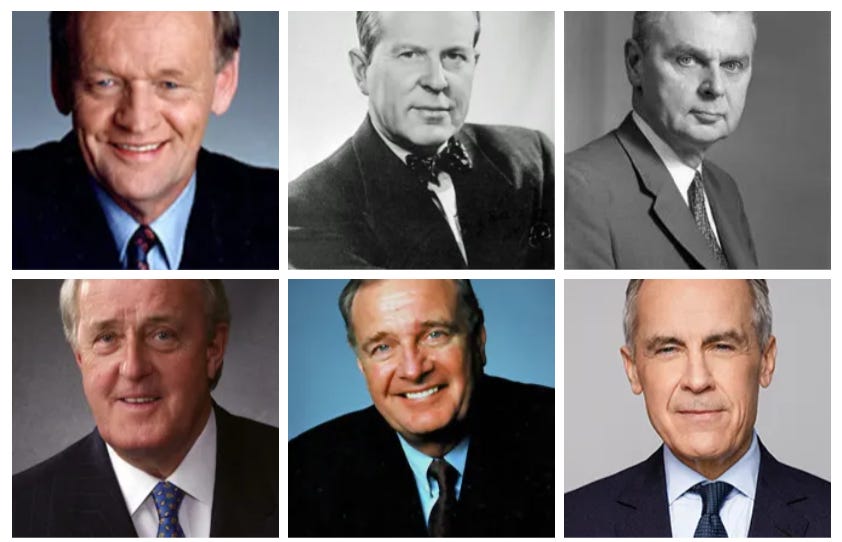
Canada’s not as deferential as we sometimes think
There’s a mythology that Canada is a fundamentally accommodating country, and that Trump-era defiance is something new we’ve had to discover. It isn’t. We’ve said no before, and usually been better off for it.
1963 — Diefenbaker and the Bomarcs. Canada had agreed to host American Bomarc missiles, useless without nuclear warheads Washington wanted stored here under U.S. control. John Diefenbaker’s government stalled for years — a dispute that helped bring down his government, ironically replaced by Pearson’s Liberals, who accepted the warheads.

1965 — Pearson and Vietnam. Canada never sent troops, but Pearson went further: at Temple University, he urged a pause in the U.S. bombing of North Vietnam. LBJ summoned him to Camp David and reportedly grabbed him by the lapels: “Why did you have to piss on my rug?” Pearson kept us out anyway.
1985 — Mulroney skips “Star Wars.” One of our most pro-American PMs still declined Reagan’s invitation to join the Strategic Defence Initiative that would have put weapons in space, concluding there wasn’t much in it for us and we’d have no say in how it ran. Sound familiar?

2003 — Chrétien and Iraq. Told Canadians we wouldn’t join the invasion without UN authorization. History didn’t exactly vindicate the war.
2005 — Martin and missile defence. Declined Bush’s invitation to join continental ballistic missile defence — same objection as 1985: sovereignty over weapons we don’t control.
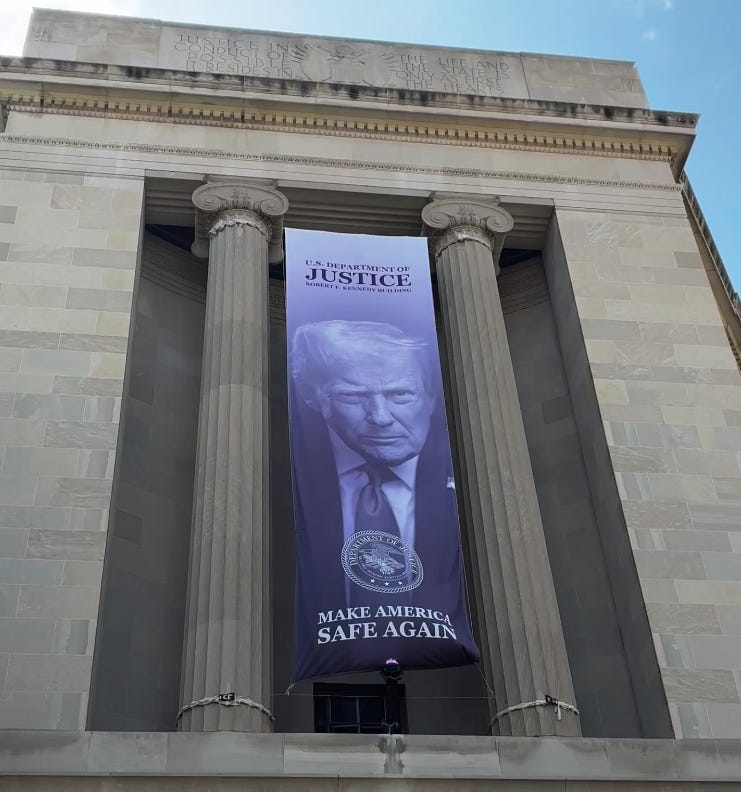
2026 — Carney and the trade table. Same instinct, new arena. Refusing terms that touched Canadian culture, autos, and sovereignty is what a “true economic partnership” was supposed to rule out.
None of these decisions were reflexive anti-Americanism —saying no was refusing a specific bad deal, or bad war.
What I keep coming back to, as someone who spends his days thinking about peace and disarmament: nearly all of them are explicitly about weapons and war — Bomarcs, Star Wars, Iraq. The instinct is to say “not with our sovereignty, and not with weapons systems we don’t control.”
If you found this interesting or informative, please like or share.
Leave a comment to explain your vote (paid subscribers)
Help gather signatures for Peace Train Canada
Peace Train Canada is calling on our government to establish and fund an independent, integrated Canadian Centre for Peace and Justice focused on research, policy, diplomacy, peace education, and training for Canadian civilians, police, military personnel, and the international community, as a fundamental part of Canada’s increased commitment to defence and security.
You can help by gathering names on this petition you can download and print.
Peace Train Canada is supported by PeaceQuest, and I’m proud to serve on its advisory board. info@peacetraincanada.com
Last week’s poll results
Last week we looked at the legacy of nuclear waste. Canada is a major exporter of uranium, and I asked you, “Is Canada accountable for the use and disposal of nuclear materials and waste by our foreign buyers?”
Most people said, yes, we bear a responsibility (65%). While some said not really, we have no control (9%). Fully one-in-four didn’t take either view, saying they were not sure and it's complicated (25%).
Read comments
