


Two pieces of advice landed on Prime Minister Mark Carney’s desk last week, and they could hardly be further apart.
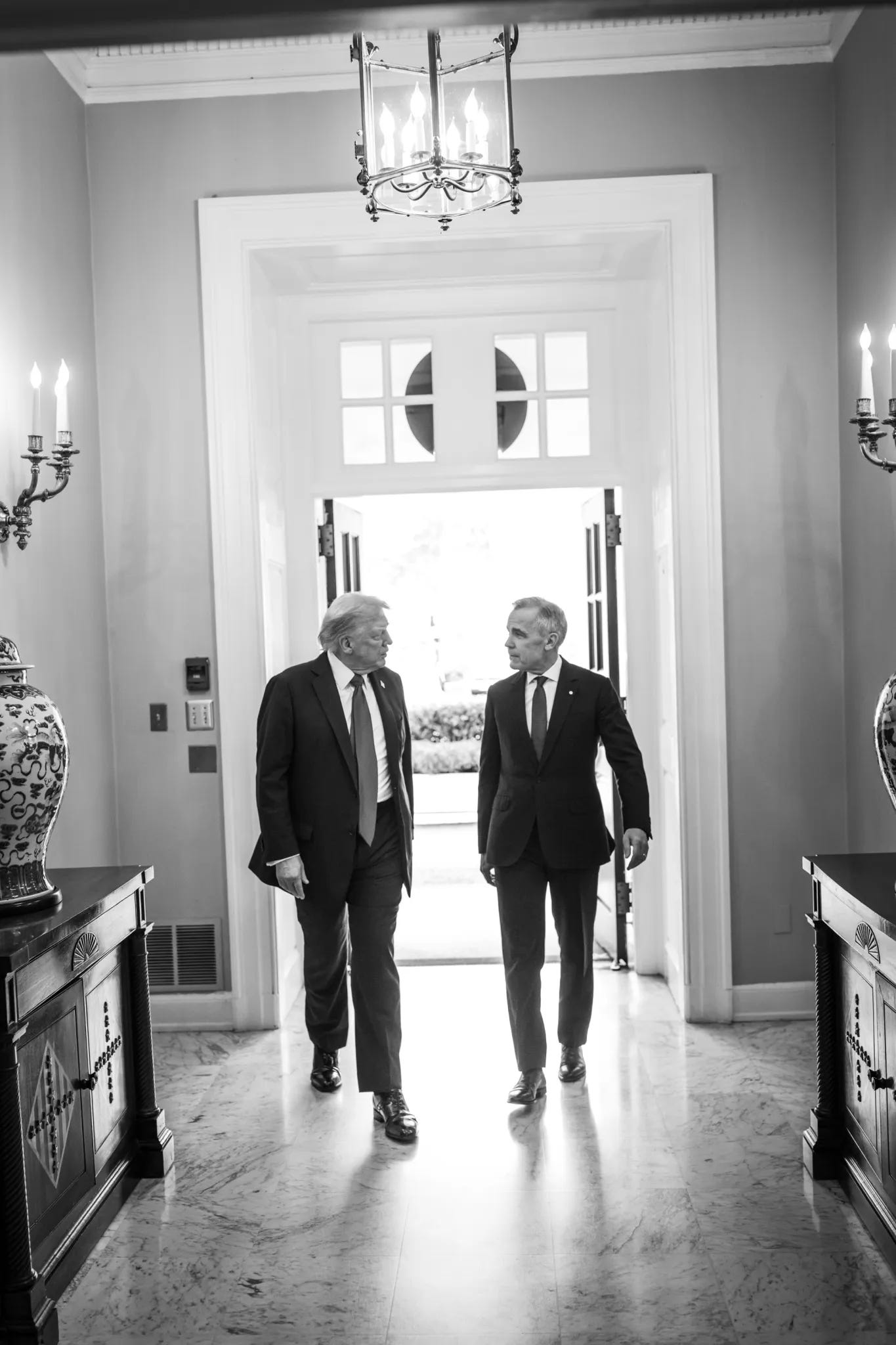
Speaking to CBC’s Power & Politics from the Halifax International Security Forum, U.S. Senator Chris Coons — in line to chair the Senate Foreign Relations Committee — urged Ottawa to take an interim deal with Donald Trump now.
“Frankly, if you can get an interim deal, I’d take it,” he said, promising a new Democratic Congress would legislate something better later.
Unifor President Lana Payne, who leads Canada’s largest private-sector union, put it differently on X: “The fundamental question is this: do we want an auto industry in this country and are we willing to fight for it? We are all in.”
That’s Carney’s dilemma: sign a flawed deal now, or wait Trump out.
The case for signing now
The clock is ticking. Without a deal, Trump is set to hit Canadian cars, trucks, auto parts and steel with 50 per cent tariffs on Jan. 1, as Barbara Yaffe points out in the Toronto Star.
Canada’s own negotiators are worried. According to CP24, Trade Minister Dominic LeBlanc and chief negotiator Janice Charette told a federal advisory committee behind closed doors that some sectors simply can’t survive two more years of tariffs.
And former U.S. ambassador David Cohen warns of “unrealistic optimism” that Democrats can override a Trump veto.
The case for waiting
Others say the midterms changed the political calculation. Former Canadian diplomat Roy Norton calls locking in a baseline tariff now “unnecessary — maybe even foolish.”
Former Conservative cabinet minister James Moore, writing for CTV, turns Carney’s own words back on him. In August, Carney said America’s signature is written “in pencil.” So, Moore asks, “why should we believe that Donald Trump’s signature is now written in ink?”
Canadians seem to agree. A new Abacus Data survey found 63 per cent want Canada to hold firm even if tariffs on Canadian-made vehicles stay or rise. Only 22 per cent favour significant concessions.
Unifor’s fight on three fronts
Unifor isn’t just warning against a bad deal that would, in Payne’s words from August, “cement unjust, industry-killing tariffs.” It’s also warning against filling the gap with Chinese “knock-down kits” — vehicles shipped in pieces and bolted together here.
“Do we want an auto industry in this country and are we willing to fight for it?” — Lana Payne, Unifor
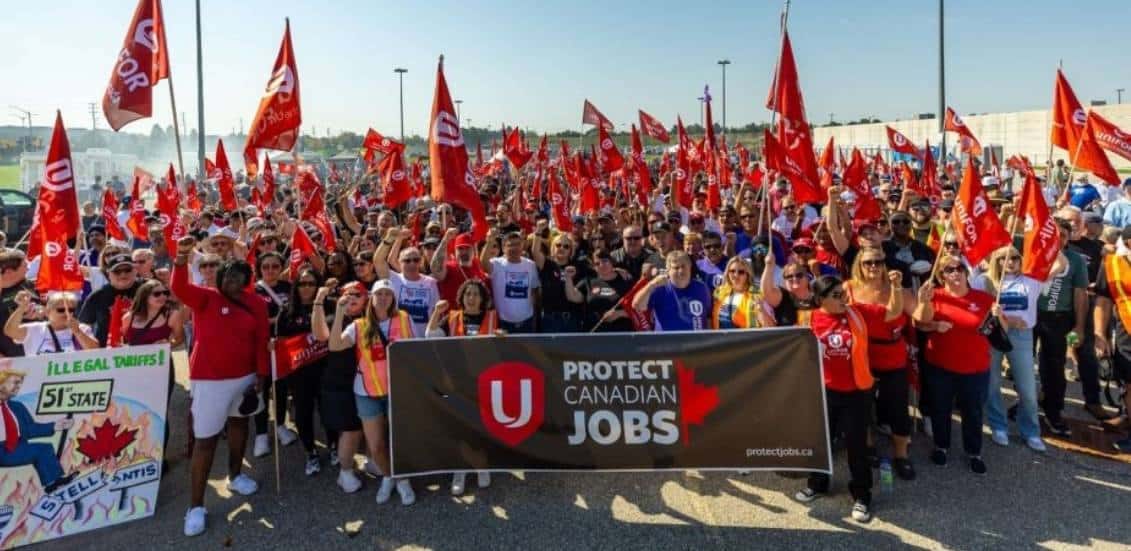
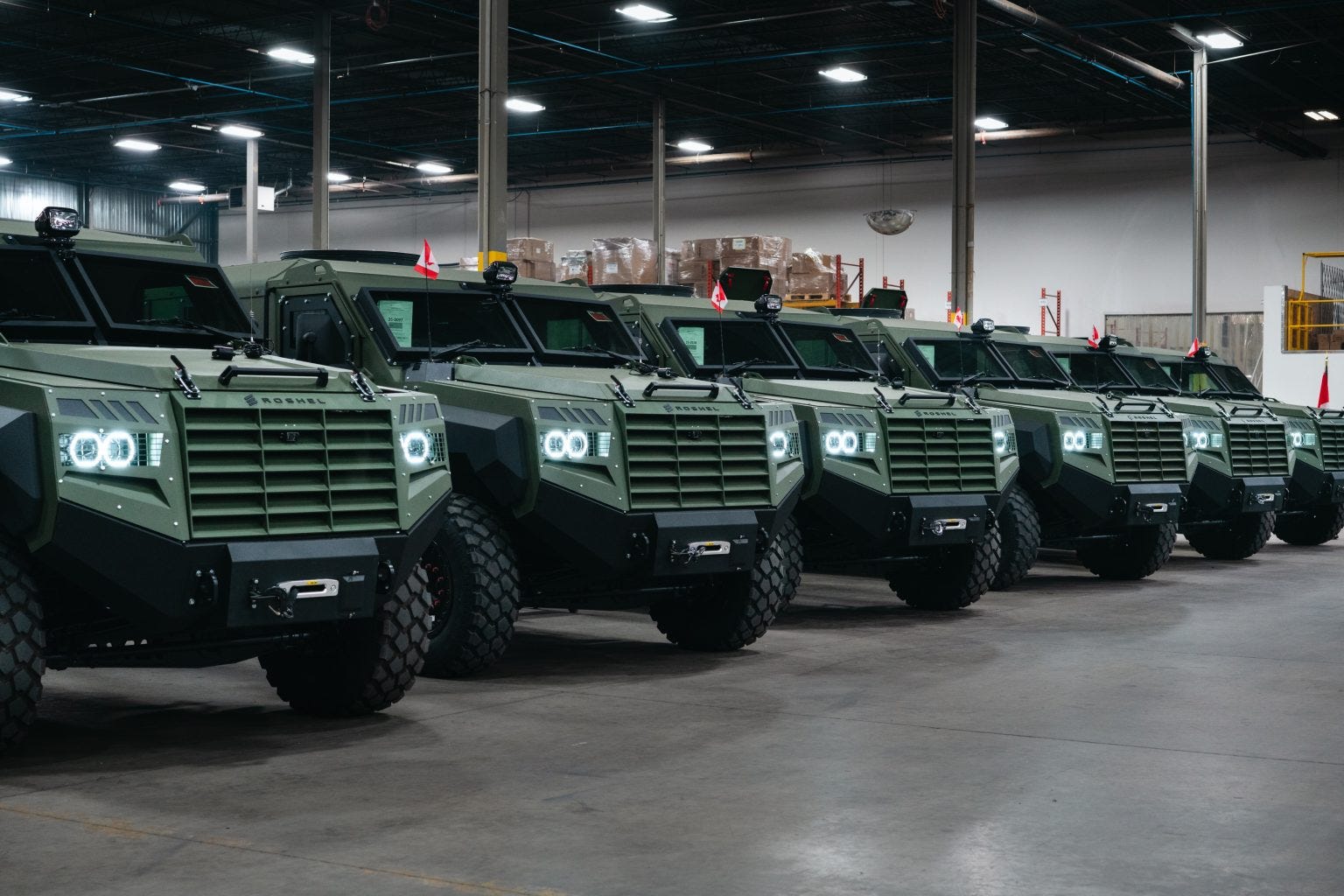
The third front will be familiar to PeaceQuest readers. Stellantis sold its idled Brampton plant to Roshel, an armoured-vehicle maker. As Sheila Copps writes in The Hill Times, a unionized auto plant “is not going to be replaced by a non-unionized armoured vehicle operation.”
Turning car plants into military plants is not an industrial strategy. It’s a detour that ties good jobs to arms exports.
What should Canada do?
Carney has already planted a flag. “Deeper integration with one partner is a huge risk,” he told the New York Times DealBook Summit, calling his new trade deals with Southeast Asia and the Philippines “insurance.”
A deal that writes permanent tariffs into the relationship between two allies isn’t peace. It’s a ransom payment — and coercion that works gets repeated.
None of this is painless. Autoworkers pay the price while Ottawa holds the line, which is why income support and retraining must come with any strategy of patience.
But maybe Canada can accept narrow, enforceable sectoral relief without signing away its leverage just as Congress — and American voters — turn against Trump’s tariffs.
So, should Carney take the deal on the table, or wait?
If you found this interesting or informative, please like or share.
Leave a comment to explain your vote (paid subscribers)
Last week’s poll results
Last week I asked whether the International Court of Justice’s landmark ruling that Myanmar committed genocide against the Rohingya would make a genocide finding against Israel more likely. Readers were nearly unanimous: 89 per cent said yes — 34 per cent “much more likely” and 55 per cent “somewhat more likely.” Five per cent saw no real effect, 7 per cent weren’t sure, and not one reader thought it made a finding less likely.

I agree with Jim. There are some exciting new members in Congress and the Senate, but I don't think they'll have the power to override the other Democrats - or Trump. Best for our government to stay with short term options AND devise protective measures for those losing employment, as was done effectively during covid.
I voted for signing narrow short-term deals on the assumption that this could allow for the later adoption of a broad-based package that would allow Canada's auto industry to survive and thrive. I don't think that waiting for the new Congress to sit would be of any use, since Trump will use his executive power to override any Congressional initiatives he doesn't like. And I don't think Congress will have enough votes to override his veto.