


A drone attack by Russian troops is nothing new in Ukraine. But investigators were astonished when they discovered the drone responsible for killing three people had no link to a human operator.
It seems to have carried out the deadly attack on its own.
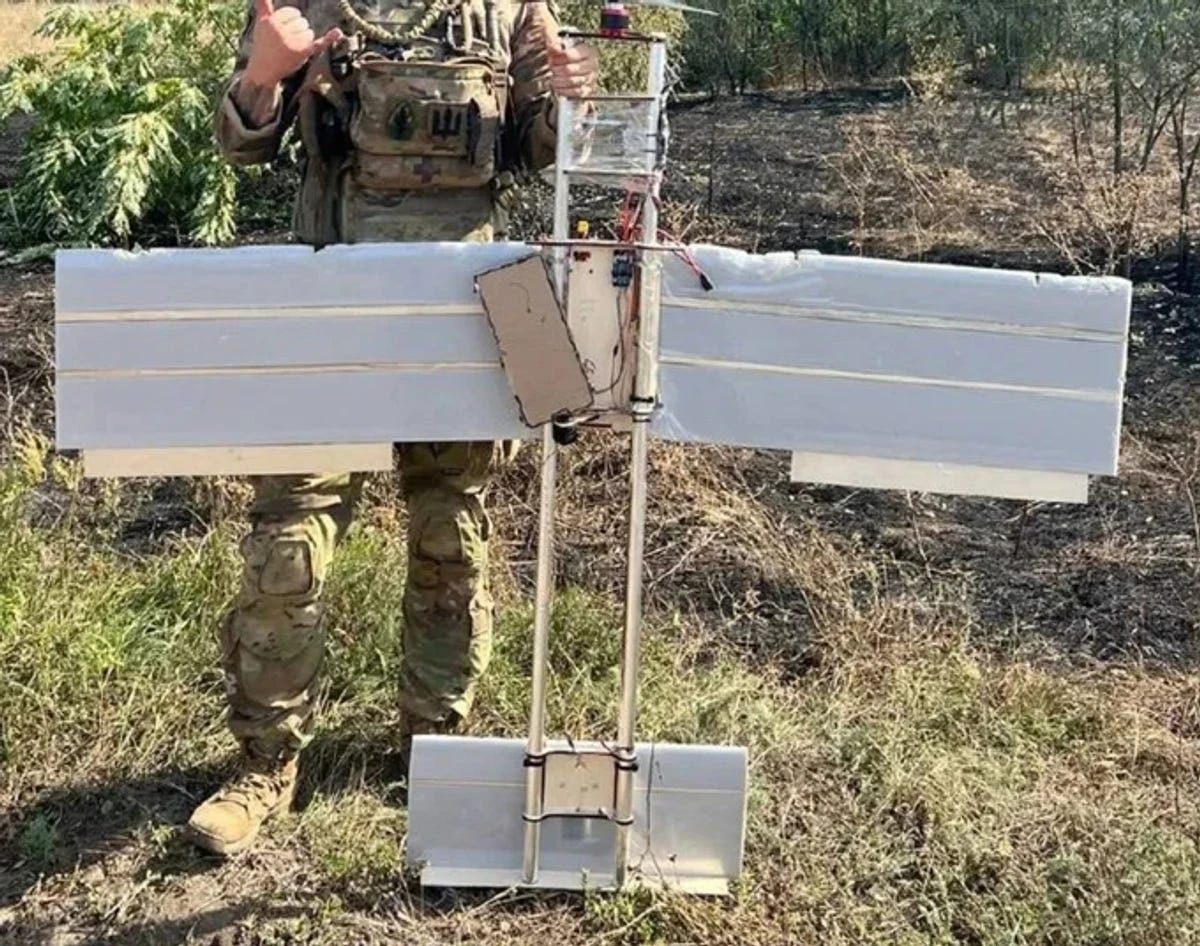
On July 6, a Russian drone was sent to strike a gas station in Zaporizhzhia, Ukraine. It didn’t need a human to tell it exactly what to hit once it got there — onboard AI, not a remote pilot, chose to attack propane tanks it had been trained to identify. The drone missed the propane tanks, hit a wall, exploded, and killed three people sheltering close by.
Ukrainian forensic teams found no antenna in the wreckage, no link to a human operator, just a consumer-grade Nvidia Jetson Orin minicomputer, the kind sold to hobbyists for a few hundred dollars.

As the New York Times reported, this appears to be the first documented case in the war of a fully autonomous weapon choosing its own target. This one was trained on infrastructure. Nothing stops the next one from being trained on people.
“In a few years, we will be living in a ‘Terminator’ movie,” said Col. Serhiy Minaiev, Zaporizhzhia’s air defence commander. Kateryna Bondar of the Center for Strategic and International Studies called the Nvidia chip “the best proof” that Russia is actively testing autonomous targeting, not just talking about it.

“A moral red line”
The reaction was swift from the highest levels.
UN High Commissioner for Human Rights Volker Türk said he was “horrified” and called for an urgent ban on weapons that can kill without human involvement.
Days later, UN Secretary-General António Guterres and ICRC President Mirjana Spoljaric issued a joint statement warning that the world is “dangerously close to crossing a moral red line: the autonomous targeting of humans by machines.”
Even Pope Leo XIV weighed in, warning that autonomous weapons “lower the threshold to war.”
The fight over three words
Here’s the problem: nobody agrees on what “meaningful human control” actually means, and that’s exactly what let this drone carry out the attack by itself.
For over a decade, “meaningful human control” was the emerging standard in disarmament talks intended to prevent “killer robots.” Nicole van Rooijen from the group Stop Killer Robots warned, “Machines should not make life or death decisions.”
But the U.S. and Russia never accepted the definition. Lena Trabucco of the Naval War College called getting agreement on “meaningful” or “control” “a near impossible task.”
Canada’s drone gold rush
Which brings me to something closer to home. This week Prime Minister Mark Carney stood with Ukrainian President Volodymyr Zelenskyy in Ottawa and unveiled a “100-year partnership” built substantially around drones made in Canada — millions of units within two years with one third going to Ukraine.
Look at the government’s backgrounder and the coverage of that announcement and you won’t find any mention of “autonomy,” “oversight,” or “human control.” They aren’t there.
Will Ottawa build real human-control standards into Canadian drone production and exports? Or will it simply let the international marketplace for drones make the decision about what gets produced and armed with AI-targeting capability?
Nobody’s answered that yet, as far as I can tell, which makes me worried.
If you found this interesting or informative, please like or share.
Leave a comment to explain your vote (paid subscribers)
Last week’s readers’ poll
Last week’s article looked at 8 ways Canada can disentangle itself from the United States, and I asked readers to choose where Canada should start. A majority (63%) said we should ditch the F-35 stealth jet and U.S. weapons, followed by stopping foreign takeovers of our businesses (20%). Some want to restore our UN Peacekeeping (7%), or use our diplomats more (3%).

Autonomous armed drones are highly likely to violate the First Law of Robotics and harm humans. Let's make anyone who turned a profit on making them criminally liable.