


War-torn Lebanon joined the Ottawa Treaty this month. It’s welcome news.
The 29-year-old ban on landmines has been facing a premature midlife crisis lately.
“Despite the ongoing conflict between Hezbollah and Israel which has resulted in thousands of deaths and injuries…Lebanon moved forward with the ban on antipersonnel landmines,” said the Ottawa-based group Mines Action Canada in a statement, celebrating the new addition.
Membership in the treaty seems to be a revolving door these days - some countries are coming in, while others are getting out.
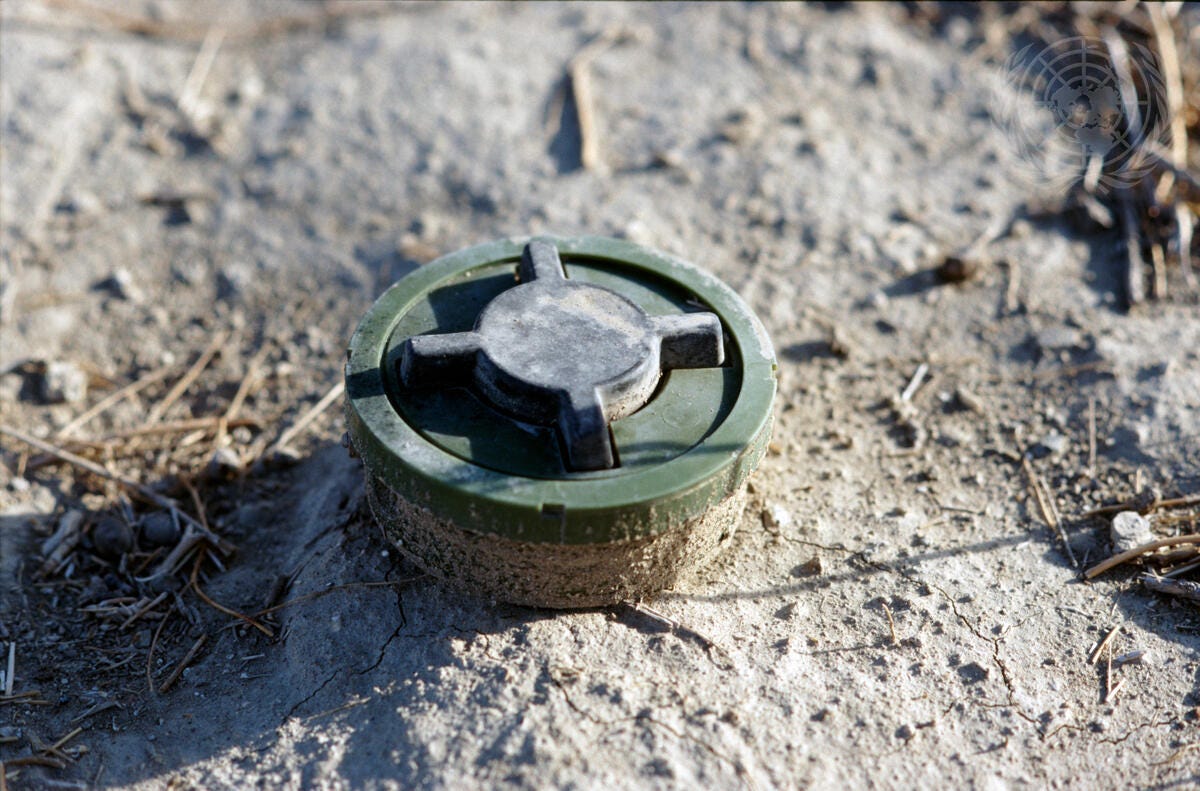
In 2025, five NATO countries (Estonia, Lithuania, Latvia, Poland and Finland) announced they were withdrawing from the Ottawa Treaty, or as known by its official United Nations title, the Convention on the Prohibition of the Use, Stockpiling, Production and Transfer of Anti-Personnel Mines and on their Destruction.
Last year was pretty rough for the treaty. It was the first time any country quit the ban.
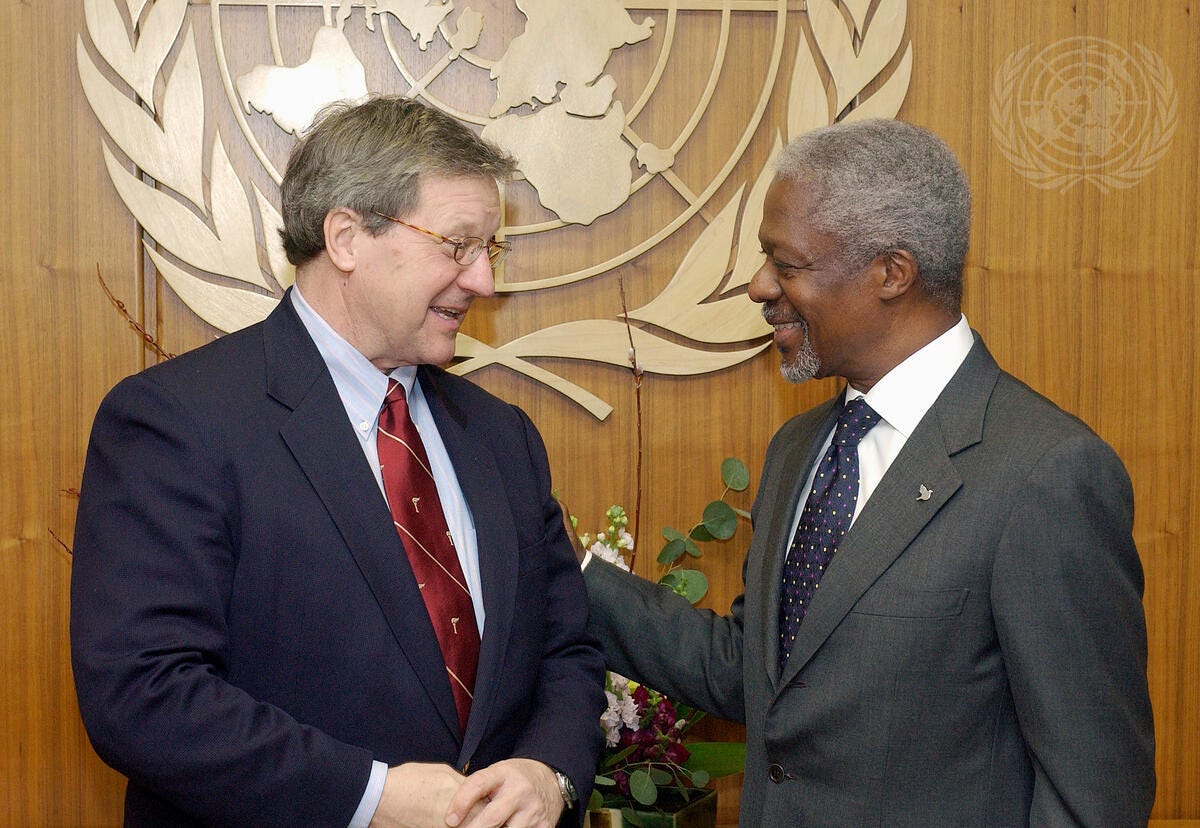
At the treaty’s 25th anniversary celebrations held in Ottawa back in 2022, Ukraine’s Ambassador joined Lloyd Axworthy, Canada’s former Minister of Foreign Affairs and then Minister Mélanie Joly to mark what some have called the most successful disarmament treaty of all time.
But less that three years later, Ukrainian President Volodymyr Zelensky signed a decree initiating his country’s withdrawal from the international treaty banning anti-personnel landmines.
The treaty prohibits leaving the treaty during armed conflict, so legally Ukraine is still a State Party to the Ottawa Treaty.
In all six cases, the Russian invasion of Ukraine and the perceived threat that other countries along Russia’s Western border could face a similar fate was used to justify the return to using landmines.
Putin’s army has spread landmines widely in occupied Ukraine following the invasion, making the country one of the most mined on Earth. Russia, along with other major powers including the United States and China, never joined the landmine ban.
So when NATO members start pulling out of the treaty, what kind of message does that send to the rest of the world?
As to be expected, many pro-war analysts and military leaders have used the Russian invasion to argue for their countries to withdraw, too – and Canada is no exception.
They say that the world when the treaty was negotiated no longer exists. Using arguments that were echoed by Prime Minister Mark Carney in his famous Davos speech this year, one decried the landmine treaty was a relic of the past, “in an age of great power competition.”

The progress that the Ottawa Treaty has made in preventing terrible deaths and injuries from landmines, mostly inflicted upon civilians, is undeniable.
The International Campaign to Ban Landmines’ Landmine Monitor 2025 says that 94 states have officially completed destruction of their stocks of antipersonnel mines, destroying a combined total of over 55 million antipersonnel landmines.
The Ottawa Treaty, as it’s often called because of the key role Canada played in the late 1990s bringing the treaty about, holds a special place of high-esteem in our collective memory – a time long ago when Canada was a leader internationally.
Drawing on this essential role, Mines Action Canada has called on Canada to speak up and engage with our allies in defence of the Ottawa Treaty banning landmines.
“Landmines are a weapon of choice for those like Russia and ISIS who want to terrorize civilians or a weapon of desperation for non-state actors with no other options,” said Erin Hunt, who heads the group. “The Baltic countries [leaving the treaty] are neither of those.”
“This Canadian success story has saved countless lives over the past 25 years and must stay strong to prevent future harm,” Erin added.
(The article has been updated regarding Ukraine’s legal status within the Treaty. My thanks to Mines Action Canada).
If you found this interesting or informative, please like or share.
Leave a comment to explain your vote (paid subscribers)
Readers very concerned about U.S. interference in Canada
Last week’s newsletter looked at reports that both Russia and the United States are supporting Alberta separatists through online misinformation campaigns. The odd de facto collaboration to undermine Canada makes the two countries very strange bedfellows, which seems to be leaving “official Ottawa” unable to respond.
I asked you to choose which country; Russia, China or the United States, posed the greatest threat of foreign interference to Canada. Readers overwhelmingly chose the United States (96%).

If ever there was a weapon of war whose horrendous effects have most severely impacted innocent civilian populations, it is the landmine. This has been especially so for rural-dwellers, whose attempts to feed their families and make a subsistence living have often resulted in debilitating injuries and death. A case in point is the country of Laos, whose Plain of Jars area was littered with vast amounts of explosive ordinance during the Indo-Chinese wars. Although these wars are long over, many landmines are still there, hidden in farmers' fields and strung along their pathways. Laotians have continued to suffer their life-shattering effects for well over a generation. The partnership between the Canadian Government and the United Nations resulting in the Ottawa Treaty banning landmines, was thus a major achievement in the service of humanity. It should not now be forsaken in the face of ever-increasing challenges to global peace.
I feel that they will need to defend this project and hopefully reduce the number of deaths and all countries are still on alert.