


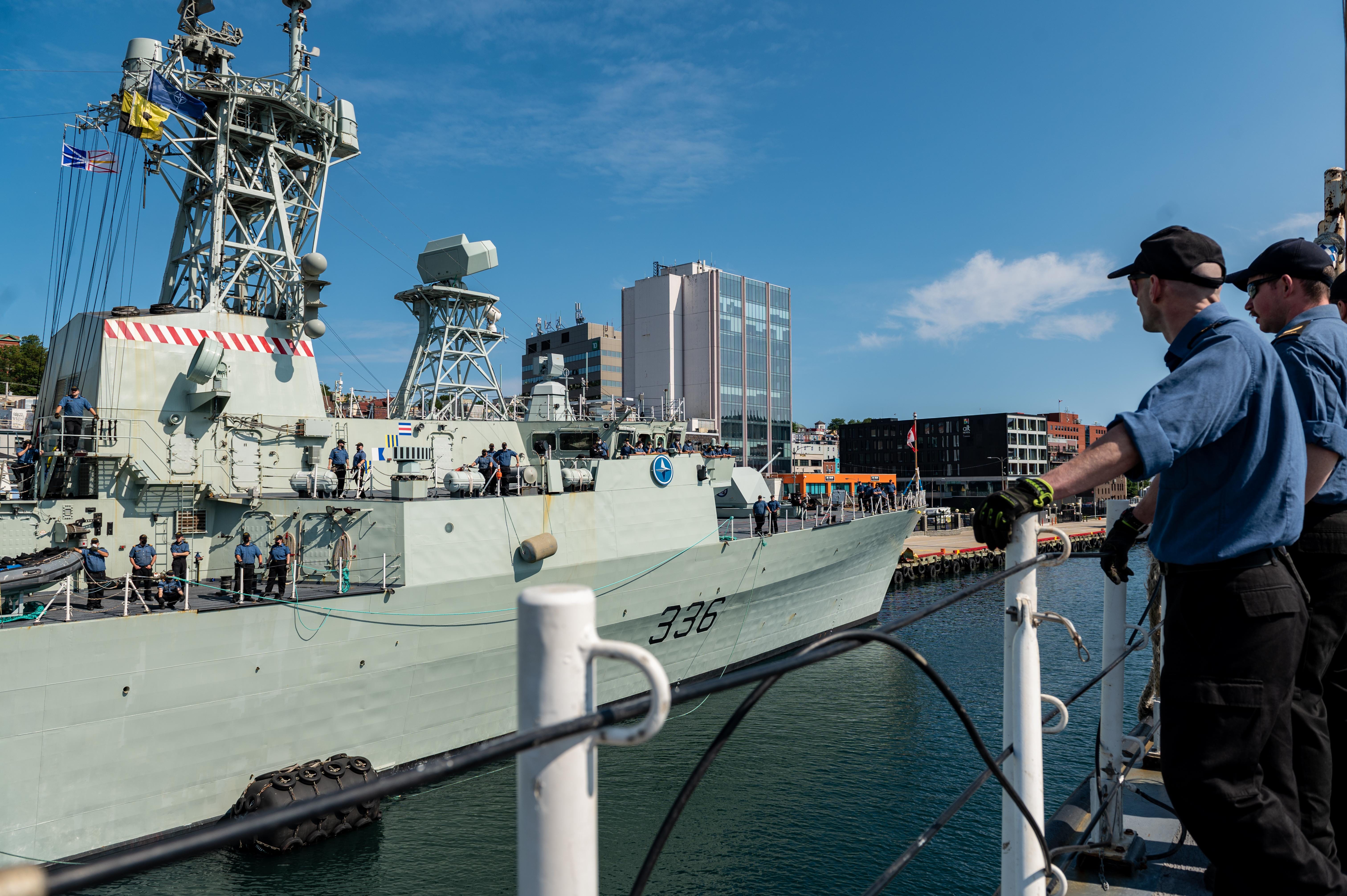
Canada is ready to put troops on the ground, on the water or in the air above the Persian Gulf to reopen the Strait of Hormuz and allow oil shipments to resume.
But there is a catch
In last week’s PeaceQuest newsletter, we looked at the evolution of Canada’s policy on Trump’s unprovoked and illegal war on Iran, with enthusiastic help from Israel.
From initial support of the U.S.-led war, to promises of not being involved in the fighting, and then a willingness to send military forces to reopen the Strait of Hormuz – it’s clear Canada is now ready to commit sailors, soldiers or pilots.
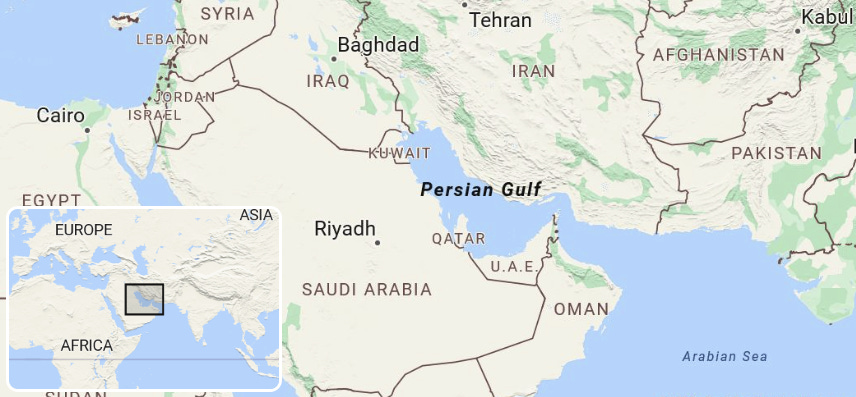
The narrow Strait of Hormuz was closed by Iran after it was attacked by the United Sates and Israel, choking off 20% of the world’s oil and gas supply.
But – and this is a big “but” – Prime Minister Carney says Canada will only join the mission alongside NATO allies and others if there is a ceasefire between the United States, Israel and Iran.
“There are conversations with our NATO partners — some NATO partners — concerning what we can do with a ceasefire, at the moment there is a ceasefire, in order to restore the movement of vessels,” Carney told reporters Thursday in French. “That’s the conversation. These are ongoing conversations,” he added.
“There are conversations with our NATO partners — some NATO partners — concerning what we can do with a ceasefire.”
Prime Minister Mark Carney
The conversation is likely the one initiated by France involving 35 nations. President Emmanuel Macron, who has suggested having a U.N. framework for any action in the strait, has said international efforts could only happen once hostilities calm, insurance and shipping firms are consulted and with Iran’s consent.
What would Canada contribute militarily?
Canada’s military force would include a combination of ships, surveillance aircraft, and support personnel.
Speaking to CBC, Canada’s Defence Minister said, “Vessels, de-mining expertise, intelligence, cyber capacities — these are all on the table as we share this knowhow with our counterparts to see what is the best way to go forward,” he said. “But again, this is predicated on the notion that there will be a ceasefire.”
Shades of Ukraine’s Coalition of the Willing
The French initiative for an international force after the fighting stops echoes another European initiative for Ukraine.
Canada has also joined the “Coalition of the Willing” – a group of nations (without the United States) pledging readiness to be part of a peacekeeping force deployed on Ukrainian territory the moment Ukraine and Russia sign a “comprehensive ceasefire agreement” or “peace deal” to settle the war.
If you found this interesting or informative, please like or share.
Leave a comment to explain your vote (paid subscribers)
Last week’s poll results
Last week we looked at polling that showed three-quarters of Canadians being opposed to sending troops to the Middle East. In the context of troops being sent, nevertheless, I asked, “Might public support change if troops are committed to the Middle East?”
Two-thirds (66%) of readers felt with troops in harm’s way, public opinion would be more opposed to Canada’s presence in the midst of hostilities. One-in-ten (8%) felt it might increase support for Canada’s presence, and an equal number (9%) felt it would make no change.

Let Trump and Israel clean up their own bloody mess. We should be doing more to ensure Palestinian and Lebanese safety. Had we and all Nato countries put more pressure on Israel and enforcement of the Ceasefire in Gaza, had the UNSC done more to bring BIBI and his gang to the Criminal Court in the Hague, would Israel still have attacked Iran? Bibi and Trump feel entitled to do whatever they want and have not suffered consequences for their criminality and genocidal actions. A big NO from me.
If there is a ceasefire, Canada's role could be akin to its traditional peacekeeping role, especially if the actions foreseen are undertaken by a broad group of like-minded countries operating under a UN banner. In these circumstances, Canada could make a positive contribution to lasting international peace in the Middle East.