


The U.N. nuclear talks collapsed, and the U.S. is threatening to withhold troops, ships and planes from NATO.
Now comes France to spread its nuclear weapons and influence across Europe.
In April we issued a warning that U.N. nuclear talks in New York were set to fail – for the third time in a row… Unfortunately, that’s exactly what happened.
Our friend Cesar Jaramillo points to wars involving Ukraine and the Middle East and tensions surrounding Iran’s nuclear program that led to “fundamental disagreements” on everything, making it impossible to get a final agreement on the Nuclear Non-Proliferation Treaty (NPT).
At the same time, American President Trump is turning up the pressure on NATO, withdrawing troops from Europe and pulling U.S. ships and planes from NATO’s defence plan.
Veteran anti-nuclear campaigner Ray Acheson said the spread of nuclear weapons as a result of the failure of U.N. talks and Trump’s withdrawal is very real.
“We are seeing more countries, particularly in Europe, claim that Russia’s aggressive actions against Ukraine mean they need nuclear weapons as deterrents, and since many of them no longer see the United States as a reliable partner in NATO, they are looking to acquire their own nuclear weapons or collaborate with France on new nuclear deterrence arrangements.”
Ray Acheson
We took a deeper look at this possibility earlier:

What’s France up to?
The United Kingdom and France are the only nuclear states in NATO-Europe. But the UK’s submarine-launched weapons are deeply integrated with the United States, making France the only NATO member other than the U.S. that develops and deploys its own nuclear forces.
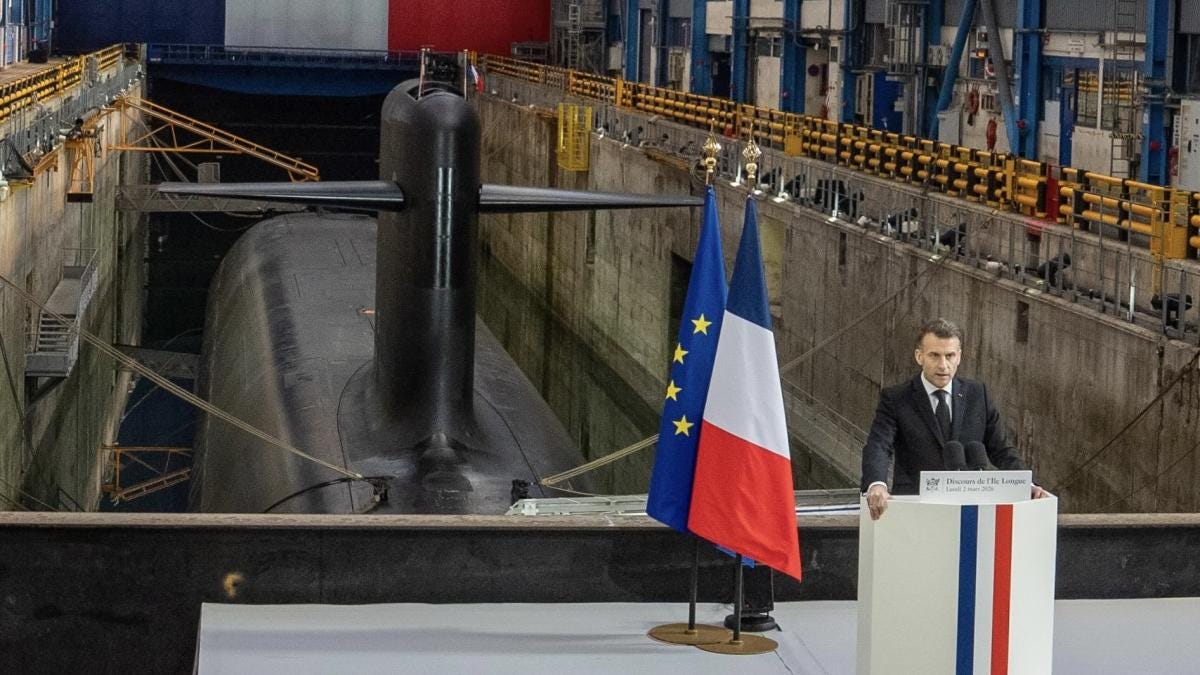
Defense News says French President Emmanuel Macron plans to expand France’s independent nuclear arsenal and implement a policy of “advanced deterrence” that could include deploying nuclear-capable forces to the territory of willing European allies.
President Macron gave a long-awaited speech in March on the country’s nuclear doctrine:
“We must strengthen our nuclear deterrence in the face of the combination of threats, and we must consider our deterrence strategy in the depth of the European continent, with full respect for our sovereignty, with the gradual implementation of what I would call advanced deterrence.”
French President Emmanuel Macron
President Macron has been recruiting countries who wish to shelter under the French nuclear umbrella.
Norway has become the ninth European country to sign-up for French nuclear protection in light of heightened concerns vis-à-vis Russia and broadly faltering trust in U.S. reliability.
Aside from Norway, Germany and Poland, Sweden, Denmark, Greece, the Netherlands, Belgium and the U.K. have also joined the new French forward deterrence scheme (no sign of interest from Canada).
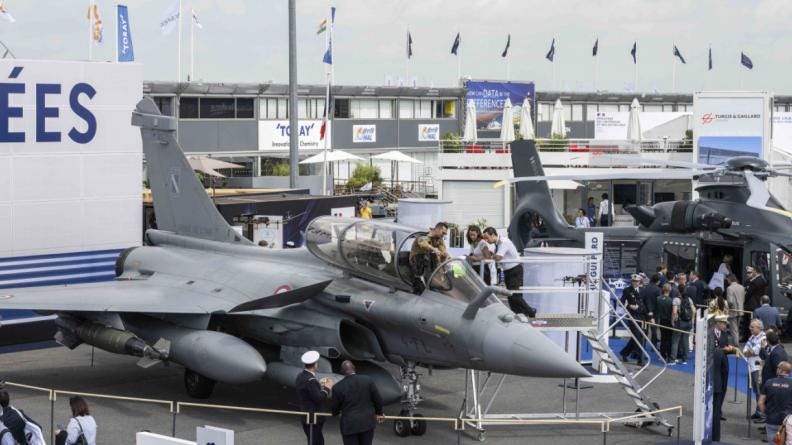
How the policy would be implemented is unclear, but it might require forward-basing French Rafale jets armed with nuclear-tipped cruise missiles. (Five NATO states already store U.S. nuclear weapons and Belarus hosts Russian nukes, but under the rules these nations are not counted as nuclear powers on their own.)
France is increasing its nuclear stockpile, while developing a new hypersonic air-launched nuclear-tipped cruise missile and a submarine-launched strategic ballistic missile.
Warning of a “domino effect”
Nuclear expert Matt Korda says Russia likes to make verbal threats about its nuclear weapons, while NATO prefers the more low-key, “speak softly and carry a big stick” approach. But make no mistake – NATO is just as active in flexing its nuclear muscle as Russia.
Hear more from Korda on this podcast:
The continued reliance upon nuclear weapons by the big powers and their failure to commit to disarmament, as promised in the NPT, may inspire others to acquire their own nuclear weapons.
The head of the U.N. nuclear watchdog agency says there could be many more nuclear states waiting in the wings.
Rafael Grossi, Director General of the International Atomic Energy Agency (IAEA), warns that the current atmosphere of intense conflict could push up to 20 countries to reconsider nuclear options if they feel their regional security is threatened.
This makes the possibility of abolishing nuclear weapons more distant, while making it all the more urgent to achieve a nuclear-free world.
If you found this interesting or informative, please like or share.
Leave a comment to explain your vote (paid subscribers)
Readers say spend more on diplomacy
Last week I shared some comments from Lloyd Axworthy and Allan Rock calling for a new peace agenda for Canada. I asked you, “Should Canada focus as much on diplomacy as defence?”
A slim majority (53%) of people said that Canada should spend more on diplomacy, while the remainder were divided nearly evenly between spending less on defence (22%) and striking a better balance between the two (26%).
Readers comments:
“Canada was not named by Trump as one of the derelict NATO nations in the Iran conflict. Because we had no military capability left. In the coming years, this will dramatically change and we will need to exercise our ‘no’ for future requests.” – S. Ross
“If the health and education are not supported where will the military get strong personnel? It seems there are plans to reduce financially these needs are being drastically cut even more than they are now. We the Canadian civilians require both these needs be met to live full lives and hence able to contribute productively.” – H. Hannah

I keep hoping for an end to nuclear weapons some day, but must admit I see no sign of the world progressing towards this goal. That is a great pity, because unless we earthlings change course on this issue, our future destruction is probably foretold.
Saddened to see the size of our majority. I wonder if that could be related to age, if younger people are more hopeful. I hope so.